How to compare solar quotes in Ontario
Seven steps for comparing price basis, equipment, production, net metering, warranties and scope.
Compare scope, equipment, assumptions, warranties, incentives and payment terms before you sign. The review is independent: no equipment sales, installer commissions or referral fees.
Onsite meetings in Durham Region and Northumberland County. Remote quote reviews are available across Ontario by FaceTime or video meeting.
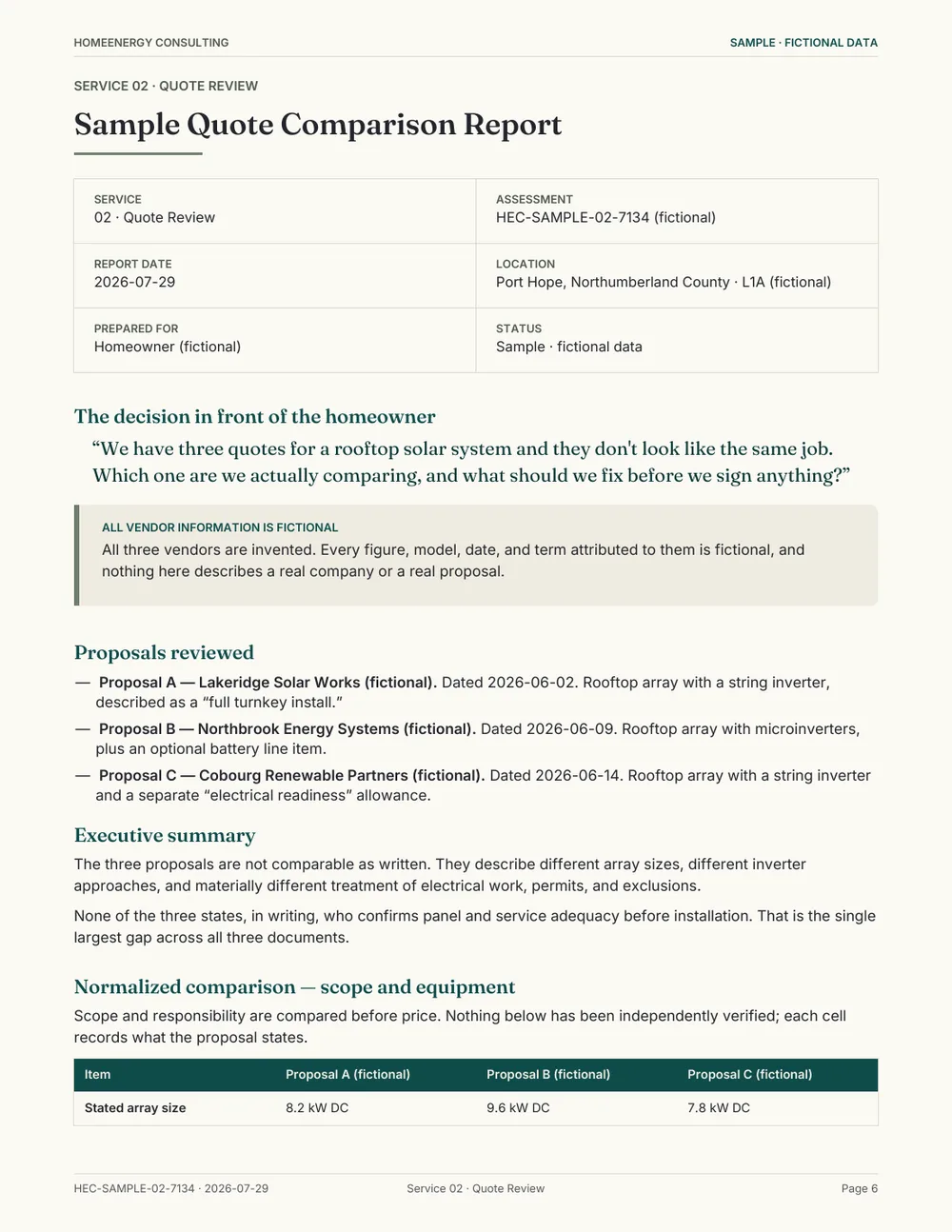
The lowest price and the best value are not always the same quote. Two proposals can look similar while using different assumptions about solar production, estimated hydro-bill savings, future electricity rates, net metering, equipment, incentives, exclusions and service responsibility.
| Review area | What gets normalized | Why it matters |
|---|---|---|
| Price basis | Subtotal, tax, discounts, allowances and assumed incentives | Prevents unlike totals from appearing comparable |
| Equipment | Models, quantities, capacities and stated performance | Shows whether the proposed systems are actually equivalent |
| Scope | Labour, electrical work, permits, utility coordination and commissioning | Reveals work that may become a change order |
| Assumptions | Usage, production, savings, operating conditions and timelines | Separates vendor claims from confirmed facts |
| Terms | Deposit, milestones, financing, cancellation and warranties | Makes commercial risk visible before signing |
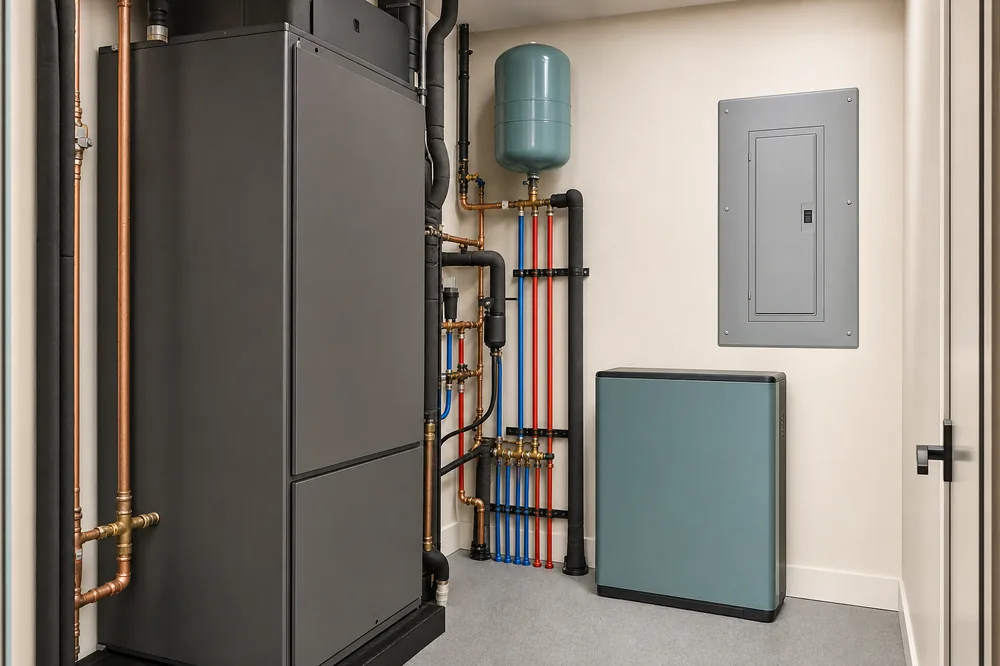
The review can cover one proposal as a completeness check or compare several competing quotes. Where a project affects batteries, backup power, panels, service capacity or another home system, those dependencies are made visible rather than ignored.
The Quote Comparison Report shows material differences, omissions, assumptions and questions in plain language. It can identify which quote best fits priorities such as price, scope clarity, terms, timeline or lower uncertainty, with appropriate caveats.
Seven steps for comparing price basis, equipment, production, net metering, warranties and scope.
Use a six-part fit test before asking an installer to design the answer.
Compare the home, fuel, distribution, electrical and backup-heat questions first.
Understand eligible credits, carry-forward limits and utility approval before buying.
Send the proposals you have. I’ll identify what aligns, what does not, and what should be clarified in writing.